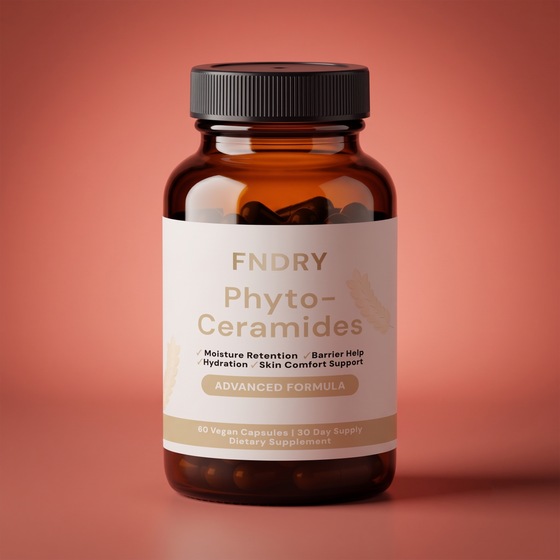


Ceramides go on. These go under.
Your skin builds its own ceramides, and it builds fewer of them with age. A cream replaces what sits on the surface. A capsule works on the supply. They are not the same job.

If you've bought a barrier cream in the last few years, you've bought ceramides. They're on the front of half the moisturisers in the aisle, and with reason — they're among the lipids that hold the outermost layer of skin together and slow the rate at which water leaves it.
What the aisle doesn't mention is where the ceramides in your skin normally come from. You make them. Skin builds its own, continuously, in the layers underneath the one you can see. And like most things skin does on its own schedule, it does less of it with age.
That gap is what this product is aimed at, and it's why the capsule and the cream aren't competing for the same job.
Two routes, two jobs
A cream works from the outside in. It puts lipids onto the surface, where they sit in the outer layer and do their work more or less straight away. That's real, it's useful, and nothing you swallow does it.
A capsule works on supply. Phytoceramides are plant lipids from the same broad family; you take them as part of your diet, they're digested like any other dietary fat, and the aim is to support what your skin is building rather than to top up what's already sitting on it. Different route, different timescale, different job.
Which is why the answer to "should I use a cream or take these?" is almost always "the cream, and then these underneath it if you want to work on the other end of it."
What's actually in ours
Per capsule
- Phytoceramides complex
- 420 mg
- Herbal equivalent
- 1,500 mg
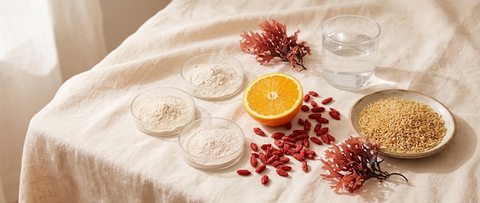
From organic oat hull fibre, organic spinach leaf, organic sweet potato, organic apple, konjac root extract and oat straw extract. Vegan capsule. No soy, wheat or lactose. Gluten-free.
"Phytoceramide" is a category rather than a single ingredient, and the plant it came from is worth reading before you buy anything in this aisle. This complex is built on organic oat hull fibre, with spinach, sweet potato, apple, konjac root and oat straw alongside it. If you avoid gluten, that's the part that matters: there's no wheat in it, no soy and no lactose, and the capsule itself is vegan.
The honest part
The research behind oral ceramides is younger and thinner than the research behind putting them on your face, and we're not going to pretend the two are on equal footing. If you're only ever going to do one of the two, do the cream. This is for the case where you've already done the obvious thing and want to work on the supply as well.
Where it sits in a routine
Underneath. That's the design principle across the whole range: nothing here replaces what you already use. Serum, cream, SPF — all of it stays exactly where it is. This is a foundation layer that the rest of your routine sits on top of.
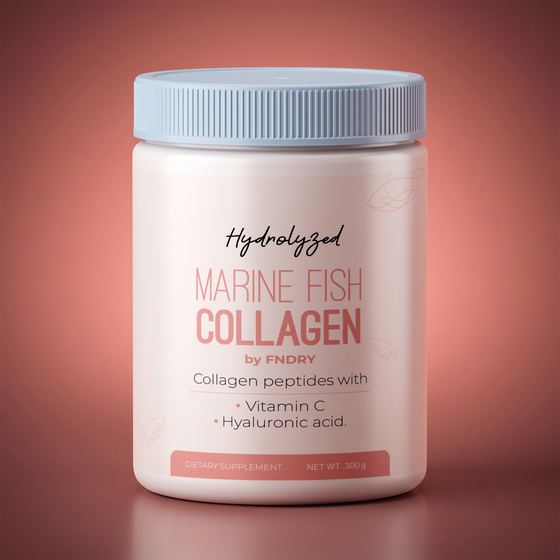
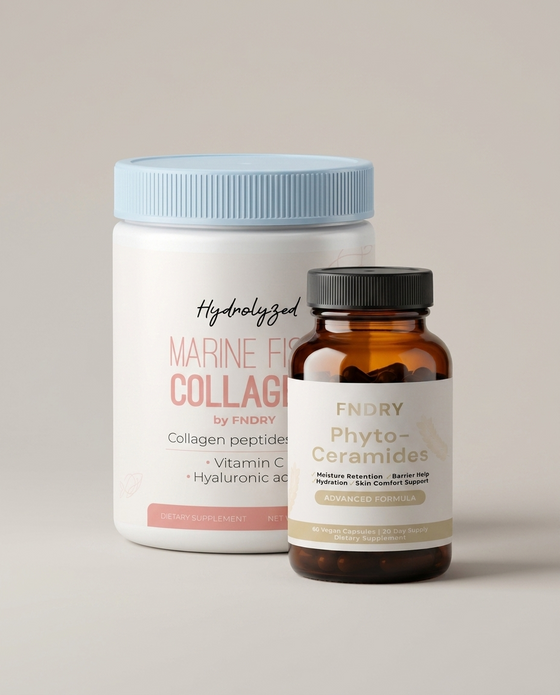
It's also why it pairs with the collagen rather than duplicating it. Collagen is structural protein; ceramides are barrier lipids. One is scaffolding, the other is weatherproofing, and they're aimed at two different things that both change in your forties and fifties. That pairing is sold together as the Skin Duo.
One thing to know about the pair
The ceramides on their own are vegan and gluten-free. The Skin Duo is not — the collagen half is fish-derived, so the bundle contains fish and is not suitable for vegetarians. A "free of" list belongs to the product it was written for and doesn't carry over onto a bundle.
On timing
Don't expect the first month to tell you anything. What to expect sets out the honest version stage by stage, and what twelve weeks actually looks like covers how to judge it without fooling yourself in either direction.
Every active in the range is listed in full in the ingredient library. Supplements are there to support a diet, not to replace one.


