
Ingredient library

What's inside, and why it's in there

Four products, chosen and formulated for what changes in your forties and fifties. Here's every ingredient in them, what it's doing, and why it belongs in a formula built for this stage rather than a general one.

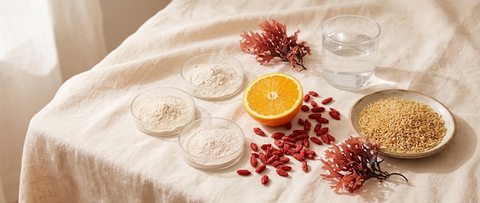
Raw supplement ingredients laid out on cream linen: dishes of pale powder, a halved orange, red berries, golden grains, dried red seaweed and a glass of water

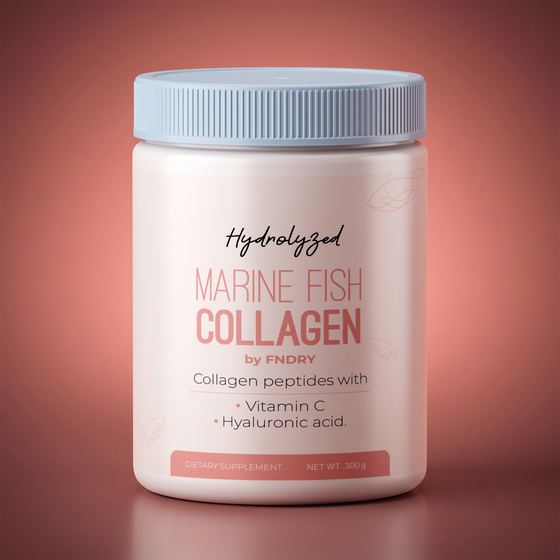
Marine Collagen + Vitamin C

One scoop in your morning coffee. This is the one product here with a formula argument rather than just a good reason to exist: collagen synthesis needs vitamin C to happen at all, and most collagen powders pair vitamin E, or nothing.

Which means the peptides you swallow are peptides your body can actually put to work.

Supplement facts

One 10g scoop · 30 servings per container

Fish collagen peptide
4,500mg
Acerola cherry extract
100mg
Vitamin C
100mg
Sodium hyaluronate
20mg
Coenzyme Q10
20mg
Selenium
10mcg

Other ingredients: maltodextrin, sucralose, silicon dioxide.

Contains fish. Not suitable for vegetarians or vegans, or with a fish allergy.

The surface of a cold north Atlantic sea, deep blue-green water with white foam threading across it in low afternoon light

Hydrolysed, from fish

Marine collagen peptides

4,500mg per 10g scoop

What it is

Collagen is the protein scaffold holding the dermis — the living layer underneath the surface — in shape. From the mid-thirties the body makes less of it each year, and the decline steepens through menopause.

Hydrolysed means the protein has been cut into short peptides before it reaches you. Whole collagen is far too large to survive digestion intact; peptides are small enough to be absorbed and to turn up in the bloodstream as material the body can build with.

Why it's in here

This is the ingredient the whole product is built around, so it's dosed to sit inside the range the research actually uses rather than at the level where a label can technically say "contains collagen".

It's also the reason the scoop is 10g rather than a token 2g stick — there is no way to fit a working amount of collagen into a sachet.

What the research shows

Randomised trials of daily collagen peptides in women over 35 have reported measurable improvements in skin elasticity and hydration over 8 to 12 weeks. The effects are modest at group level and they vary between individuals.

They also aren't permanent. What the studies observe is a change that holds while the intake continues — which is worth knowing before you buy rather than in month four.

Made from fish. Not suitable with a fish allergy, and not vegetarian or vegan.

Two halved oranges on pale cream stone with scattered peel, backlit by warm morning sun so the flesh glows amber

Ascorbic acid, with acerola cherry

Vitamin C

100mg per 10g scoop, plus 100mg acerola

What it is

The cofactor collagen synthesis requires. Prolyl and lysyl hydroxylase — the two enzymes that stabilise the collagen triple helix as it's being built — do not work without it.

So a collagen powder with no vitamin C hands your body the raw material and leaves out the tool. Most of the category pairs vitamin E instead, or nothing at all. This is the single thing that makes our formula different from theirs, and it isn't a marketing choice — it's how the biochemistry works.

Why it's in here

100mg is comfortably above the 75mg a day recommended for adult women, so the cofactor is never the thing holding the process up on a day you didn't eat much fruit.

A further 100mg of acerola cherry extract sits alongside it — a natural source of vitamin C that arrives with the compounds it occurs with in the fruit. The two are listed separately, at their own amounts, rather than added together into one bigger-sounding number.

What the research shows

Vitamin C's role in collagen synthesis is settled biochemistry rather than an open question — it's the reason scurvy does what it does.

What it can't do on its own is build collagen out of nothing. It's the enabling half of a pair, which is exactly why it's in the same tub as the peptides instead of being sold to you separately.

Extreme macro of clear water droplets beading on smooth pale grey glass in cool daylight

Sodium hyaluronate

Hyaluronic acid

20mg per 10g scoop

What it is

A large water-binding molecule that sits between the collagen and elastin fibres in the dermis, holding moisture where the structure is. The skin's own supply falls with age, alongside the collagen it sits among.

Why it's in here

It's here as part of the picture around the peptides rather than as a headline ingredient — hydration support alongside the structural work, in a formula aimed at skin that has started to feel drier as well as looser.

What the research shows

Taken by mouth, hyaluronic acid is broken down before it reaches the skin rather than travelling there intact, so any effect is indirect. Small trials have reported improvements in skin moisture and in the appearance of fine lines over 8 to 12 weeks.

The literature is thinner than it is for collagen peptides and the mechanism isn't fully agreed.

Macro of warm golden-amber oil beading and pooling on a smooth pale surface, one large droplet holding a bead of light

Ubiquinone

Coenzyme Q10

20mg per 10g scoop

What it is

A fat-soluble compound every cell uses to produce energy, concentrated in the mitochondria. The body makes its own and makes less of it with age — including in skin, where levels fall measurably from the thirties onward.

Why it's in here

One of the things that quietly declines on the same curve as collagen, which is why it's in a formula built for this stage rather than a general one.

What the research shows

CoQ10's role in cellular energy production is well established. Research on supplementing it for skin specifically is limited and mostly small-scale, and we'd be overstating it to call that picture settled.

Shelled Brazil nuts in a shallow pale ceramic dish on cream linen, lit by soft raking daylight

Trace mineral

Selenium

10mcg per 10g scoop

What it is

A trace mineral the body builds its antioxidant enzymes around — the glutathione peroxidases, which handle oxidative stress, are selenium-dependent proteins.

It's needed in micrograms rather than milligrams, and it's one of the few nutrients where genuinely too much is a real problem rather than a theoretical one.

Why it's in here

Deliberately small: a top-up on whatever your diet already provides, not a dose. Selenium has a narrow safe range and a low upper limit, and this is one place where a bigger number on a label would be a worse formula rather than a better one.

What the research shows

Selenium's role in antioxidant enzyme function is well established. Supplementing above adequacy has not been shown to add benefit, and at high intakes it causes harm.

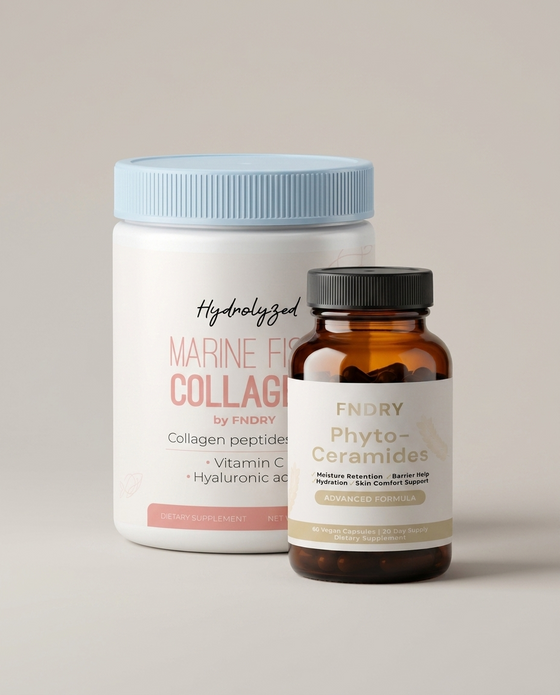
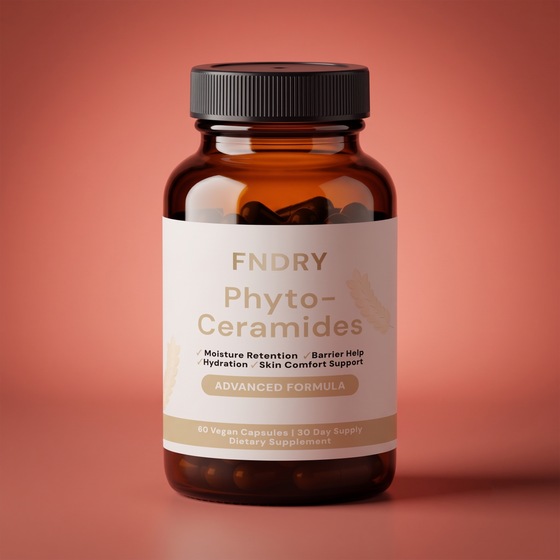
Ceramides

One vegan capsule a day. Collagen works on the structure underneath; this works on the barrier at the top that decides how much water stays in — the thing that makes skin feel tight after cleansing long before it looks any different.

Barrier lipids fall with age and fall faster through menopause, which is why this sits next to the collagen rather than inside it.

Supplement facts

One capsule · 60 capsules per container

Phytoceramides complexEquivalent to 1,500mg of naturally occurring plant phytoceramides
420mg

Other ingredients: vegan capsule, organic rice extract blend, organic rice fibre.

No soy, wheat or lactose. Gluten-free and vegan.

Rolled oats and oat hulls in a cream ceramic dish on linen, with fresh spinach leaves and a slice of apple beside it

Oat, spinach, sweet potato, apple, konjac

Phytoceramides complex

420mg per capsule

What it is

Ceramides are the lipids making up much of the skin's outer barrier — the mortar between the cells that stops water escaping. The body's own supply drops with age, and drops faster around menopause. That's a large part of why skin that never used to feel tight suddenly does.

Ours are drawn from plants rather than wheat: organic oat hull fibre, spinach, sweet potato, apple, konjac root and oat straw. No wheat, no soy, no lactose — gluten-free and vegan.

Why it's in here

420mg of the complex, equivalent to 1,500mg of the phytoceramides as they occur in the plants themselves. Most oral ceramide products are wheat-derived, which rules them out for anyone avoiding gluten — a meaningful share of the women this is built for.

What the research shows

Trials of oral plant-derived ceramides have reported improvements in skin hydration and reductions in water lost through the barrier over roughly 8 to 12 weeks. Those are group-level averages rather than a promise, and they hold while the intake does.

Barrier work is also the change people tend to feel before they see it.

Suitable for vegetarians and vegans. Full allergen advice is printed on the pack.

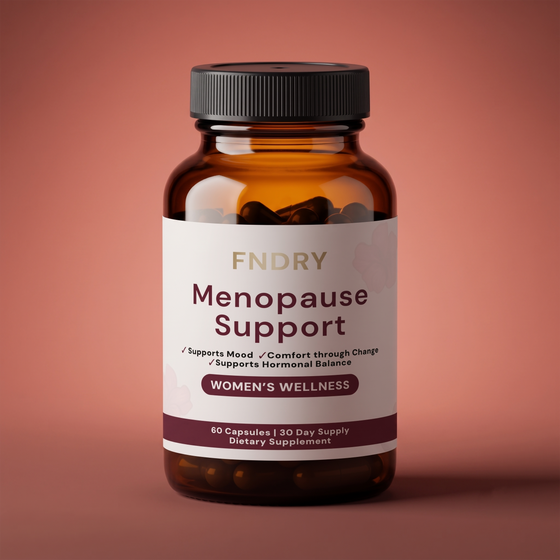
Menopause Support

Two capsules with a meal. Ten ingredients, and unlike the collagen there is no clever formula trick here — it's a well-built version of what this transition actually calls for: the botanicals with the longest history of use for it, plus the vitamins and the magnesium that get depleted along the way.

The full panel is below. The four with the most behind them get an entry of their own.

Supplement facts

Two capsules · 30 servings per container

Dong quai root powderAngelica sinensis
400mg
Lemon balm extractMelissa officinalis, organic whole plant
300mg
Red clover powderTrifolium pratense, whole plant
80mg
Chasteberry extractVitex agnus-castus, fruit
50mg
Soybean seed extractGlycine max, 40% isoflavones
50mg
Black cohosh root powderCimicifuga racemosa
30mg
MagnesiumAs citrate · 7% DV
31.25mg
Vitamin B2Riboflavin · 231% DV
3mg
Vitamin B6Pyridoxine HCl · 59% DV
1mg
Vitamin D3Cholecalciferol · 100% DV
20mcg

Other ingredients: microcrystalline cellulose, hypromellose (capsule), magnesium stearate, silica.

Contains soy.

Dried angelica root cut into thin amber rounds in a small cream ceramic dish on warm linen

Angelica sinensis, root

Dong quai

400mg per two capsules

What it is

A root used in Chinese herbal practice for centuries, and specifically in the context of women's cycles — which is why it's often called "female ginseng". It's the largest single ingredient in this formula by weight.

Why it's in here

At 400mg it's the backbone of the blend rather than a name on the label, which is the difference between a formula built around the botanicals and one that sprinkles them on top of a vitamin tablet.

What the research shows

Traditional use is long and well documented; modern clinical evidence is mixed and the trials that exist are small. We'd rather say that plainly than imply a settled picture that isn't there.

Fresh lemon balm sprigs with bright green crinkled leaves laid on pale cream stone in morning light

Melissa officinalis, organic whole plant

Lemon balm

300mg per two capsules

What it is

A mint-family herb with a long history of use for calm and for sleep. It's the reason this is a formula you take in the evening rather than with breakfast.

Why it's in here

Night waking is among the most reported symptoms of this transition, and the one most likely to make everything else in the day harder. 300mg gives the herb a real presence in the blend rather than a token one.

What the research shows

Lemon balm has been studied for sleep quality and for stress, mostly in small trials and often alongside other herbs. Structure–function support rather than a treatment claim, and we'll leave it there.

Fresh rose-pink red clover blossoms with their leaves gathered on cream linen against a soft green meadow blur

Trifolium pratense, whole plant

Red clover

80mg per two capsules

What it is

A meadow plant that carries isoflavones — plant compounds structurally similar enough to oestrogen to interact with the same receptors, far more weakly. It sits in the formula alongside the soy isoflavones for the same reason.

Why it's in here

Isoflavones are the most studied plant group in this whole category, and they are the reason a menopause formula looks like this rather than like a multivitamin.

What the research shows

Isoflavone research on menopausal symptoms is substantial but genuinely mixed — some trials find an effect on vasomotor symptoms, others don't, and responses appear to differ between individuals. That's the honest summary.

Speak to your doctor before taking isoflavones if you have a hormone-sensitive condition or take hormone therapy.

Dried black cohosh root, dark and fibrous, broken into pieces in a pale ceramic dish on cream linen

Cimicifuga racemosa, root

Black cohosh

30mg per two capsules

What it is

A North American woodland root, and the botanical most closely associated with menopause support anywhere in the world. It's the ingredient most people recognise on this label.

Why it's in here

Small by weight and deliberately so — black cohosh is potent, it's the ingredient in this category with the most cautions attached to it, and more is not better.

What the research shows

Among the most studied botanicals here, with trials pointing in different directions and no agreed mechanism. It also carries documented cautions, which is why the label's guidance matters more than ours.

Not for use in pregnancy or while breastfeeding. Speak to your doctor first if you have a liver condition or take hormone therapy.

Read the pack before you start this one

Menopause Support carries label cautions the other three don't: not for use under 18, not in pregnancy or while breastfeeding, and it may interact with hormonal birth control and with hormone therapy. Don't exceed the stated dose. If you take prescribed medication, ask your doctor or pharmacist first — take the label with you, every amount is on it.

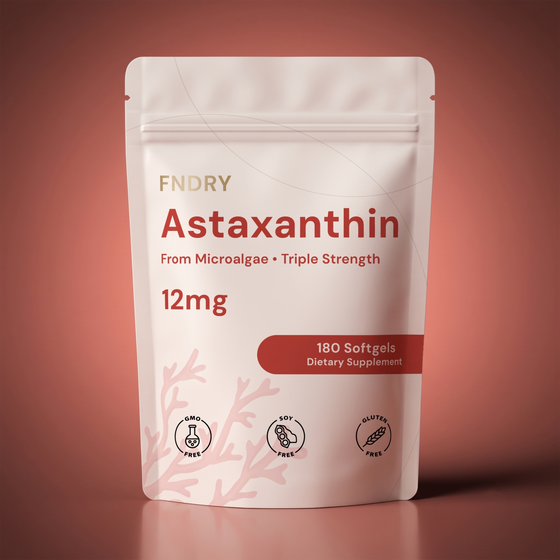
Astaxanthin

One softgel a day with a meal. The one to add third rather than first — it sits alongside the others rather than replacing anything.

Supplement facts

One softgel · 180 softgels per container

AstaxanthinFrom Haematococcus pluvialis microalgae
12mg

Other ingredients: sunflower seed oil, softgel (gelatin, purified water).

Free of soy, dairy, gluten and tree nuts. Contains gelatin — not suitable for vegetarians or vegans.

Vivid orange-red microalgae powder heaped in a small pale ceramic dish on cream linen, with a light scatter of powder beside it

From Haematococcus pluvialis microalgae

Astaxanthin

12mg per softgel

What it is

A deep red carotenoid produced by a freshwater microalga under stress — the same pigment that turns salmon and shrimp pink further up the food chain. It's fat-soluble, so it sits in cell membranes rather than in the watery part of the cell.

Why it's in here

12mg is triple the 4mg most of the category sells, and it's chosen to sit inside the range the skin research actually uses rather than below it. Astaxanthin is expensive, which is the whole reason 4mg is the norm.

What the research shows

Trials in adults taking 6 to 12mg daily have reported improvements in skin moisture and elasticity over 8 to 16 weeks, alongside changes in markers of oxidative stress. Sample sizes are generally small and the field is younger than the collagen one.

Fat-soluble, so take it with a meal containing some fat. Contains gelatin.

Not sure which one you need?

Two minutes of questions about your skin, your sleep and where you are in all this, and we'll tell you which of these is worth starting with — including when the answer is just one of them.

Structure–function statements only. Nothing on this page is a claim to diagnose, treat, cure or prevent any disease, and none of it is medical advice. If you're pregnant, breastfeeding or taking prescribed medication, speak to your doctor before starting a supplement.